The Nature of Permanence
On Protoplasting Nature and the Centre Pompidou Acquisition

[ img ]
Protoplasting Nature 05
For a long time, I have been interested in inviting time into the objects I create. Allowing them to change alongside us, gradually becoming records of their own existence. Preservation, to me, does not necessarily mean capturing something at an ideal moment. It can also mean allowing a material to follow its own course. I am drawn to the idea of objects that change almost imperceptibly, from one day to the next, from one year to another. Could ageing become an intrinsic part of an object’s existence, rather than something we try to prevent?
[ img ]
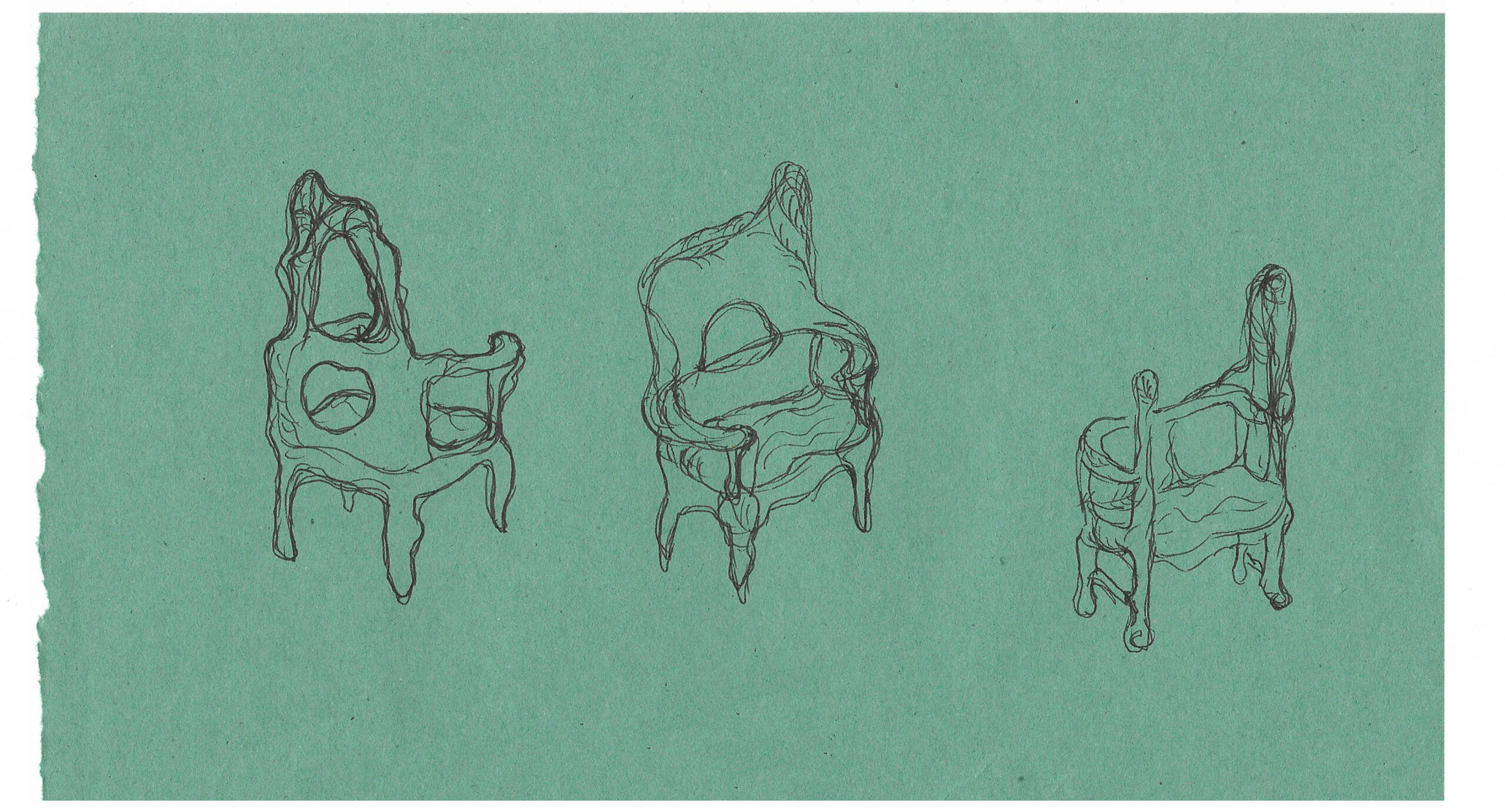
Sketches for Protoplasting Nature sculptures, 2018
Protoplasting Nature began with a much simpler observation. I had come across Thaumatococcus daniellii, a plant whose large leaves have traditionally been used for roofing in parts of West Africa. I was fascinated by the idea of a leaf becoming an essential part of a building, rather than merely an ornament. It made me think differently about historical European furniture, particularly the elaborate forms of the seventeenth century, where nature was endlessly carved, painted and translated into decoration. Why have we spent centuries reproducing flowers and plants as ornament, when the real material has always been there? I wanted to reverse this relationship. Rather than representing a leaf, could the leaf itself become elemental to the object?
[ img ]
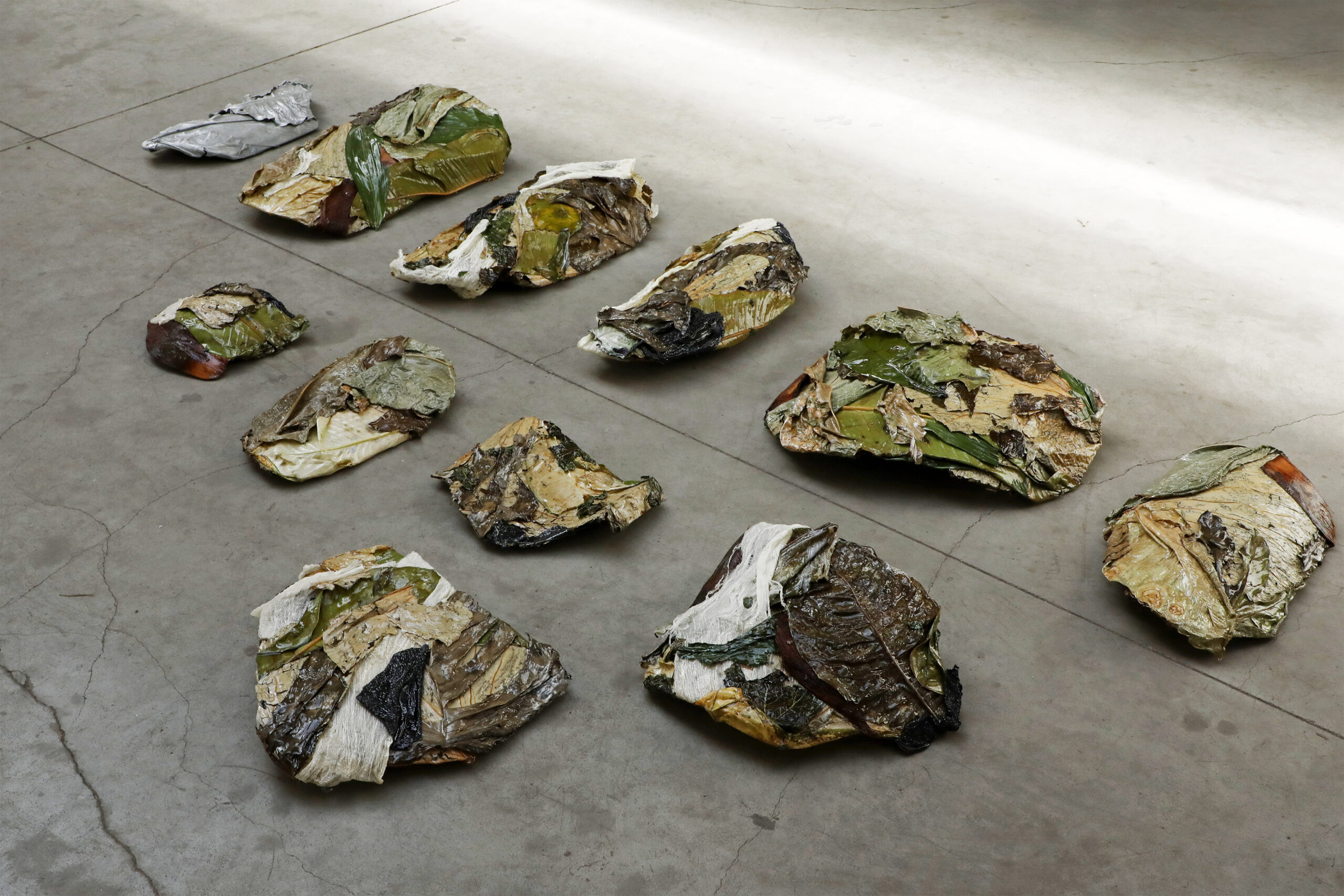
Initial Protoplasting Nature samples, 2018
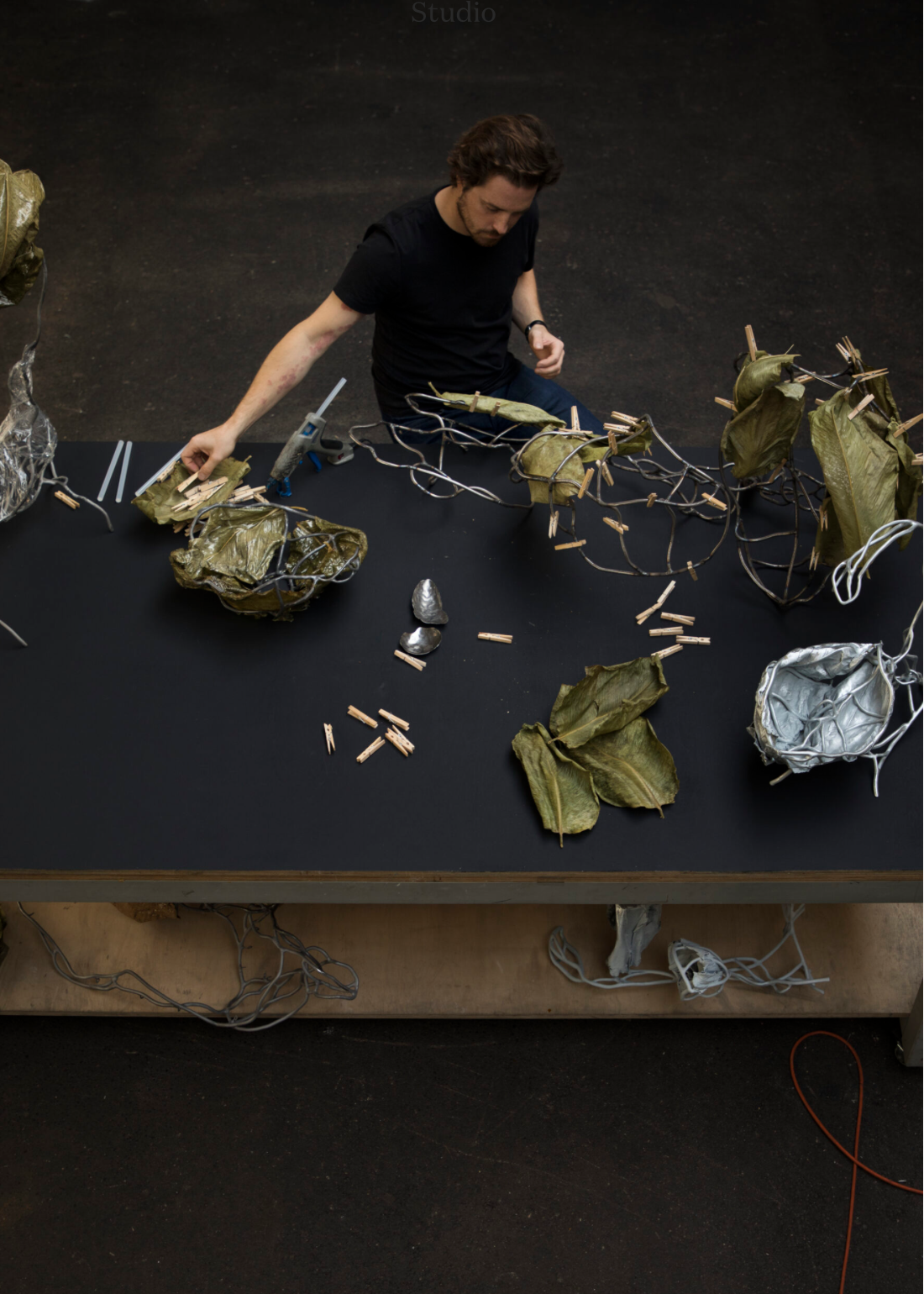
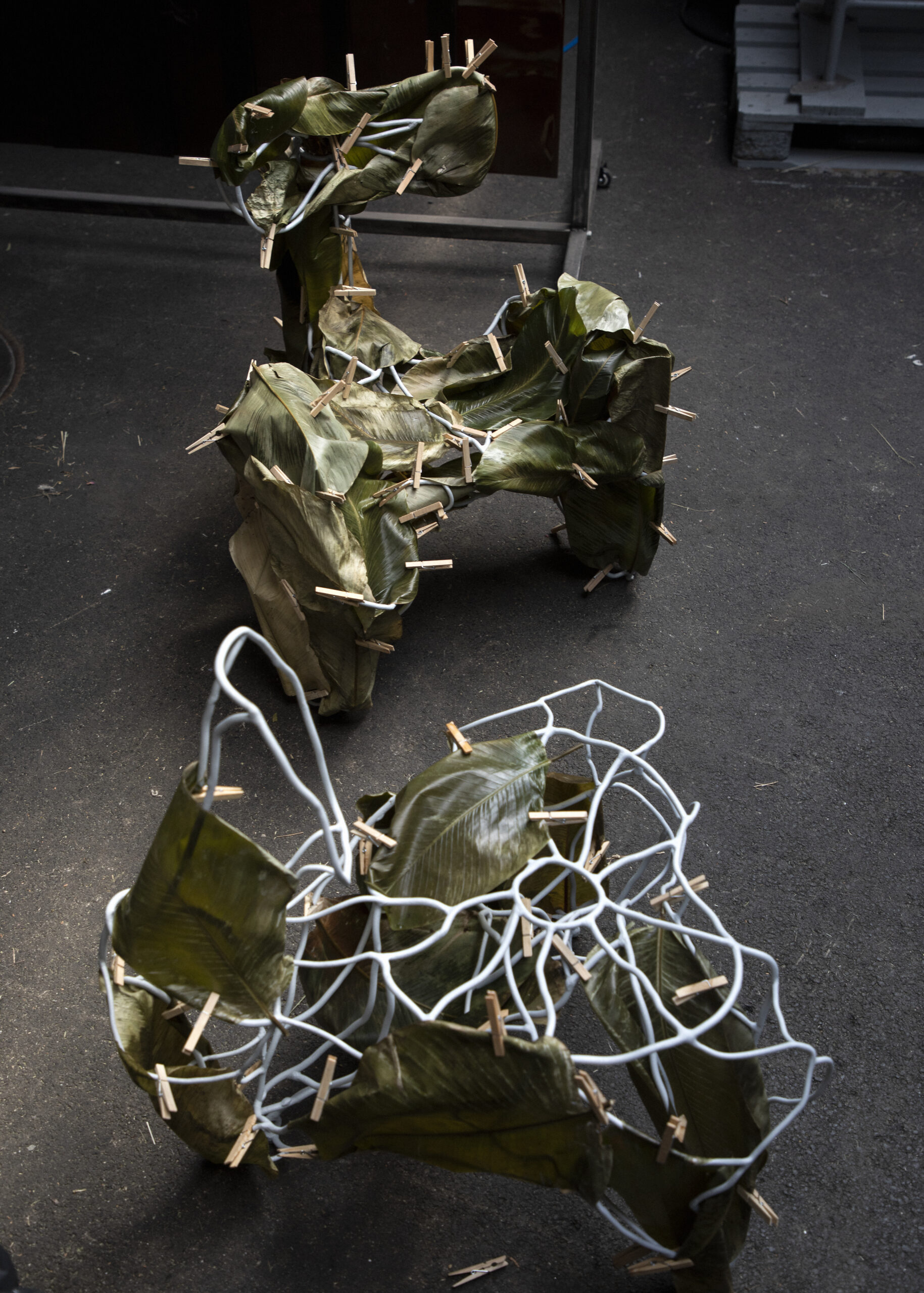
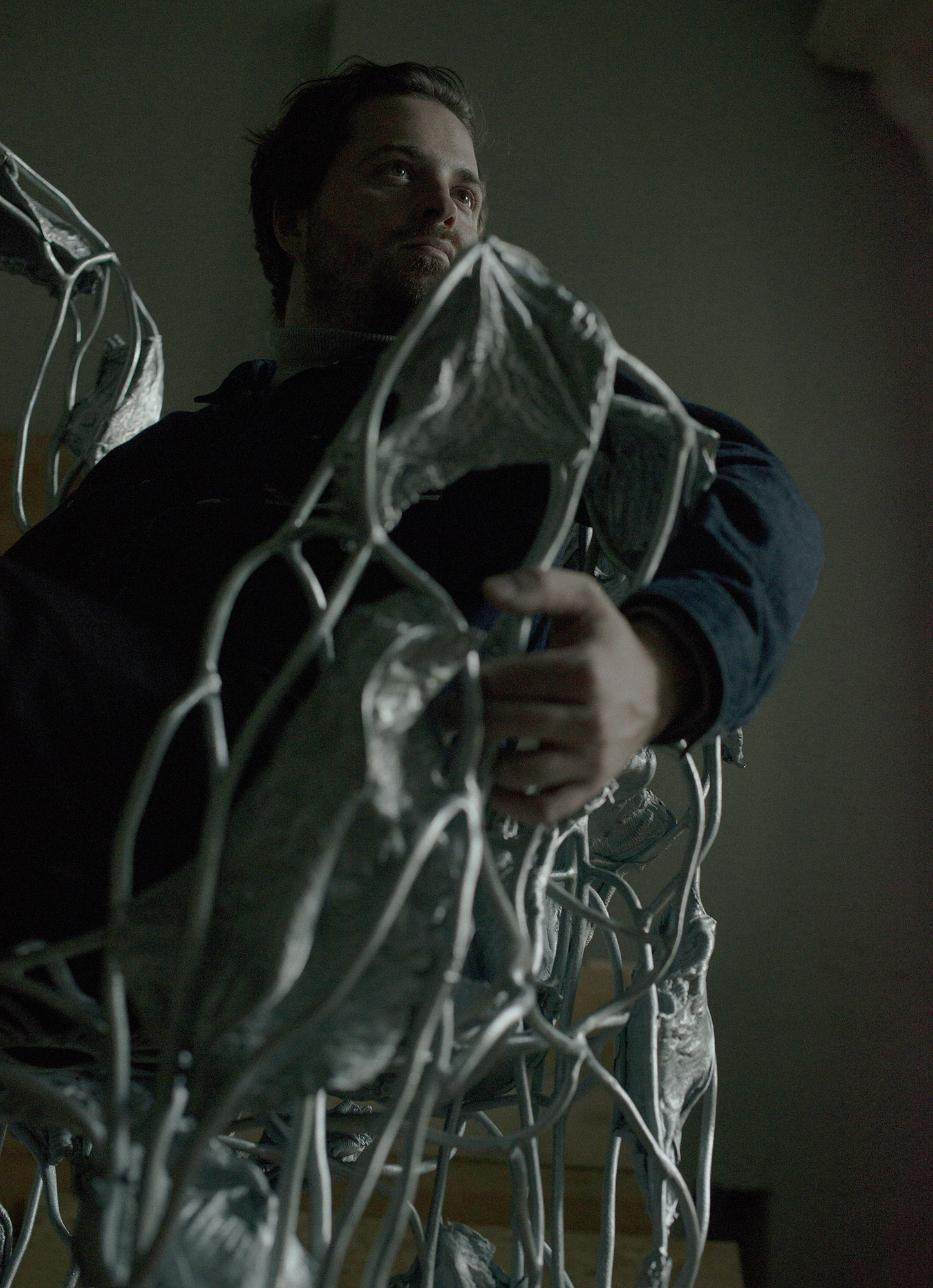
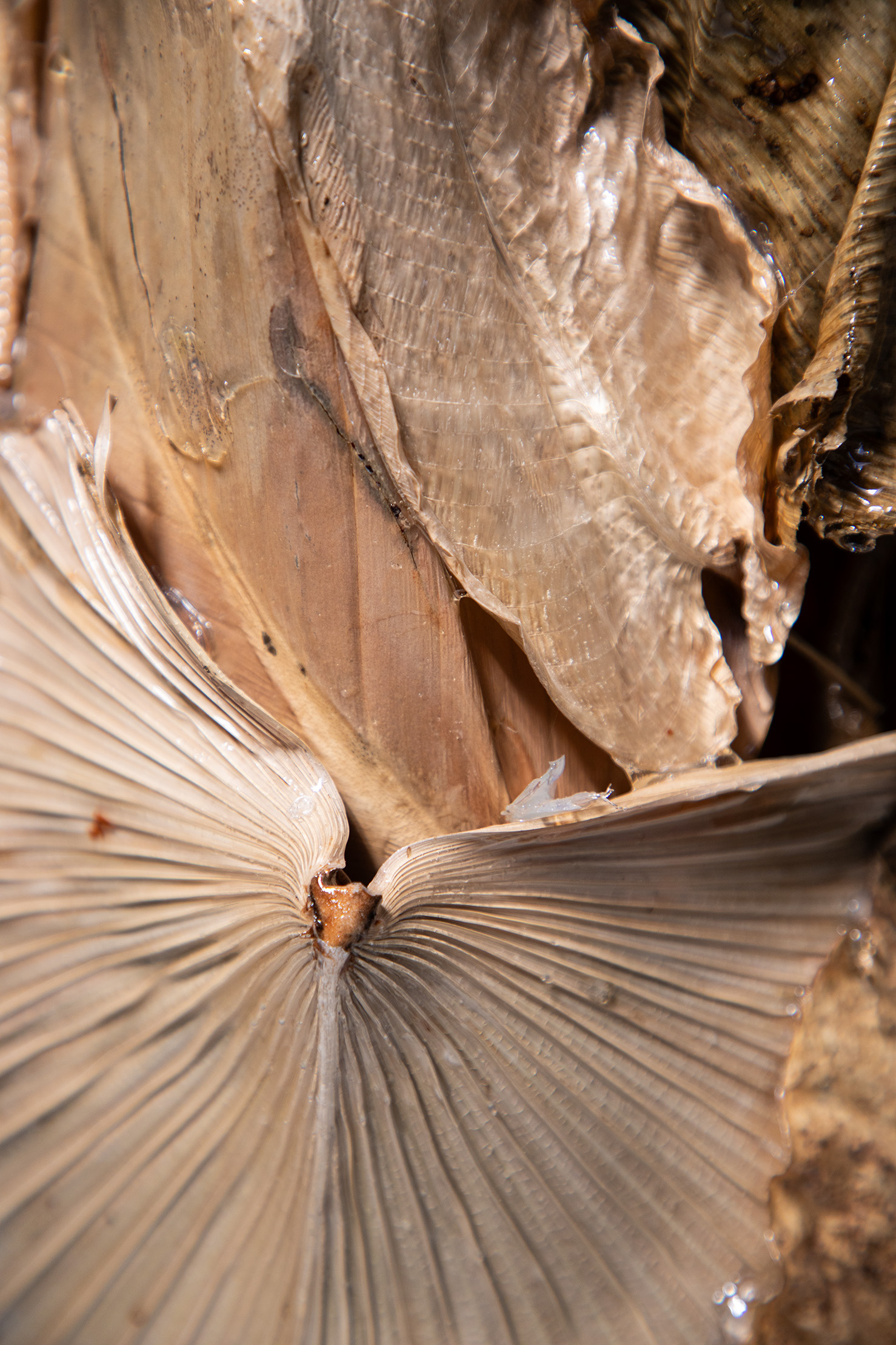
I began making sculptural frameworks from hand-welded steel wire, giving shape to the leaves I would later wrap around them. Monstera, strelitzia and other exotic plants, often discarded at the flower market, became my raw materials. As they dried, the leaves tightened and hardened around the metal skeleton, forming a fragile botanical skin. A thin layer of resin offered some protection, slowing their decay without entirely stopping it.
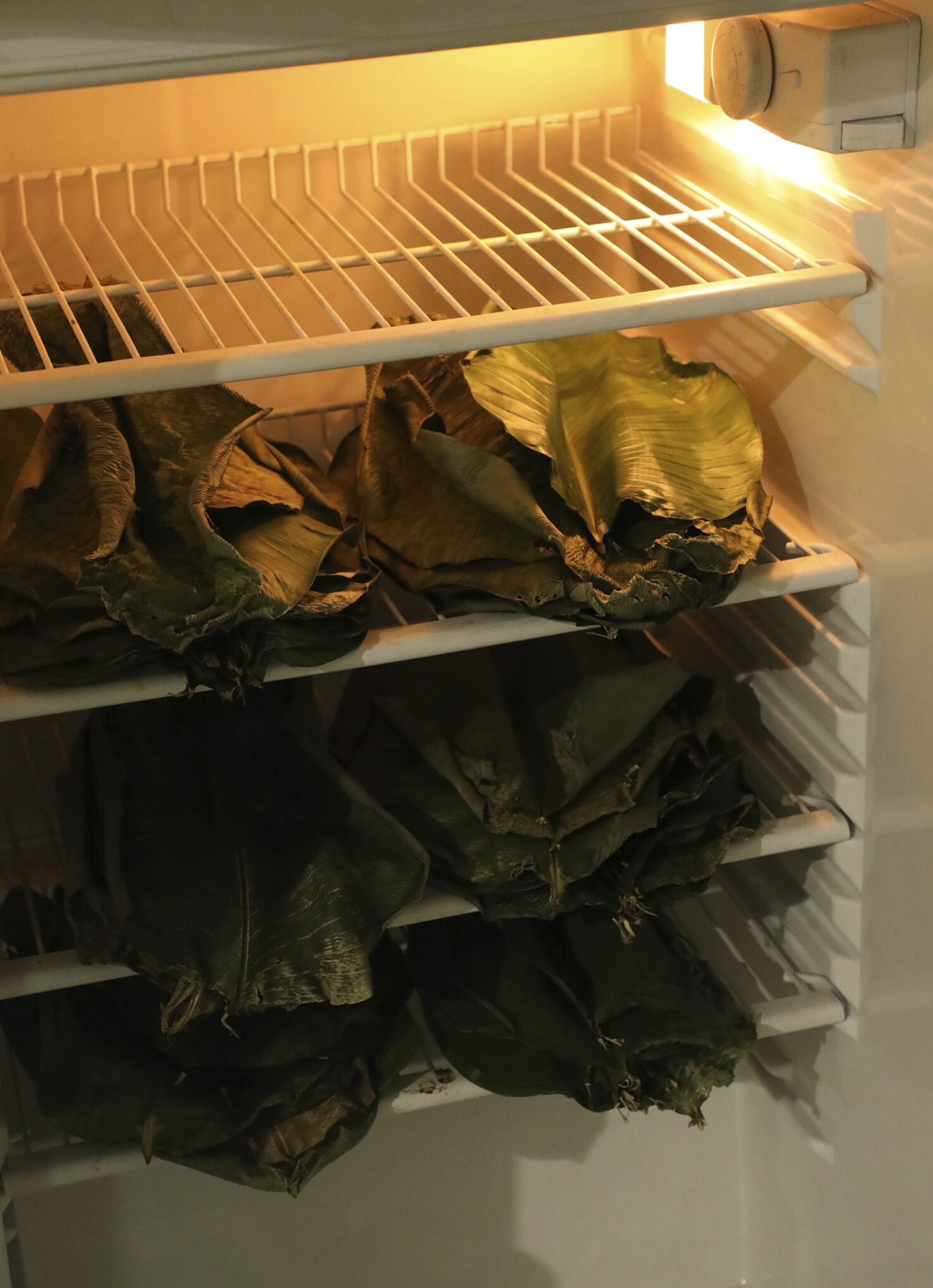
The first chair was never really intended as a conventional chair. I was interested in taking an object so deeply embedded in our everyday lives, with a form we recognise almost instinctively, and imagining a different aesthetic for it. One shaped by nature rather than simply inspired by it, where the materials would continue to change long after the object was made. The familiar archetype became a way of exploring how an object might exist closer to the rhythms of the natural world, embracing ageing and transformation rather than resisting them. In 2019, I created Protoplasting Nature 05 for an exhibition in the United States exploring the chair as an archetype. It felt like an appropriate context for a work that imagined a different future for such a familiar object.
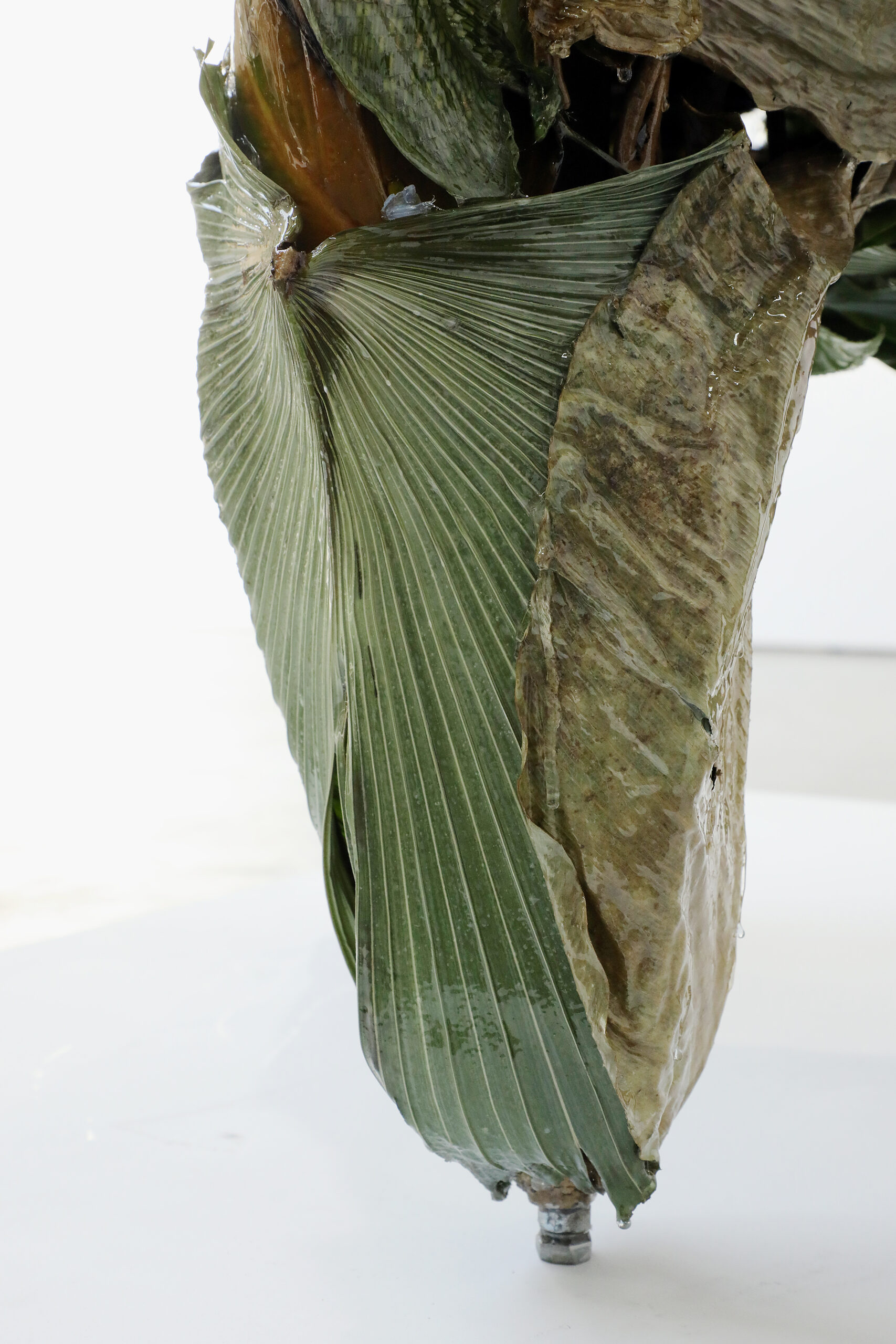
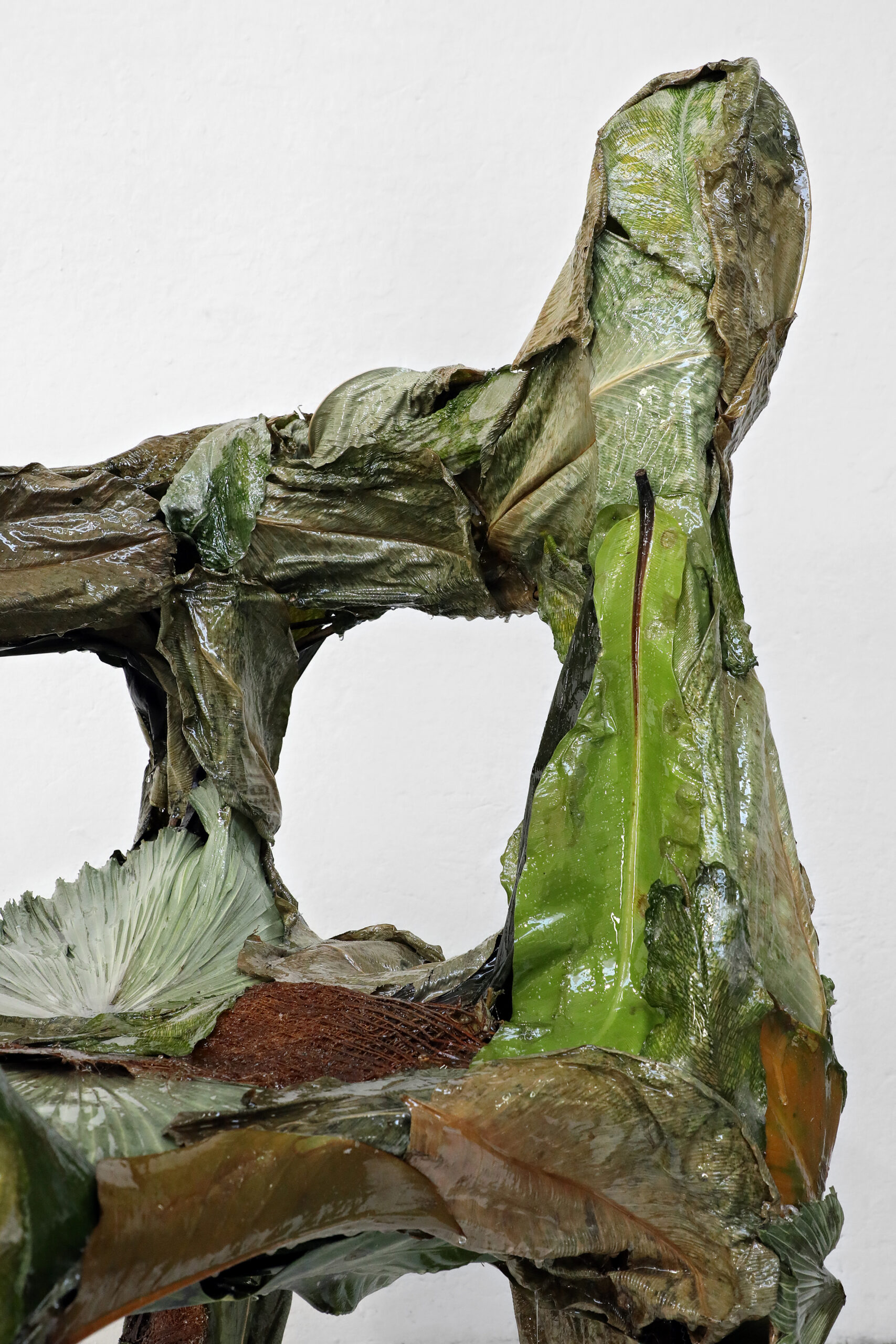
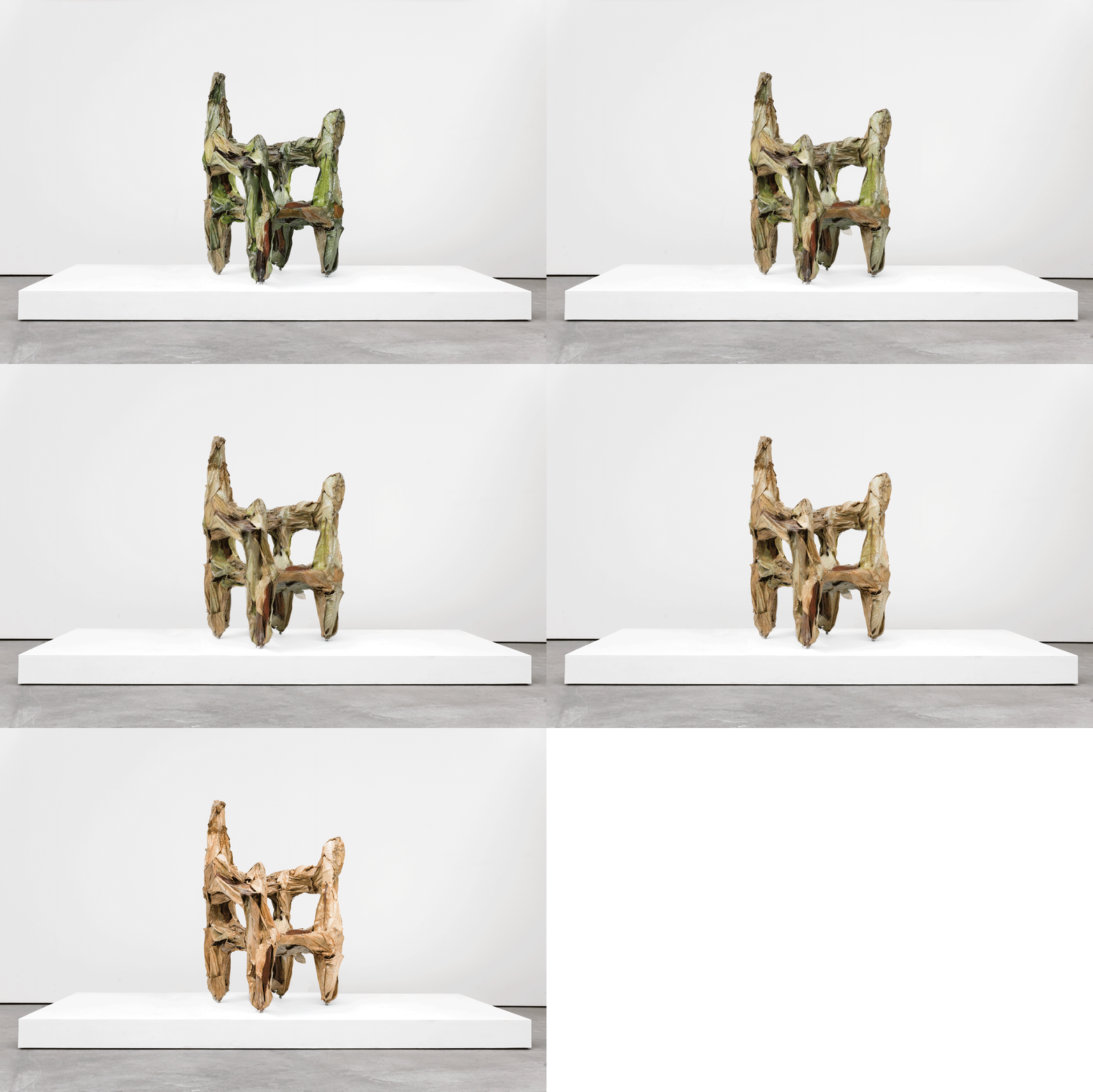
But perhaps the most interesting part of the work began after it was finished. For years, the piece remained largely out of sight, quietly changing. The steel structure held its form, while the leaves continued their slow transformation beneath the resin. Their colours responded to light, air and the passing years. Greens gradually gave way to ochres, browns, silvers and bronzes. I think of it as a kind of prolonged autumn, unfolding over years rather than weeks. This gradual transformation eventually raised a more difficult question: how do you preserve something whose very nature is to change?
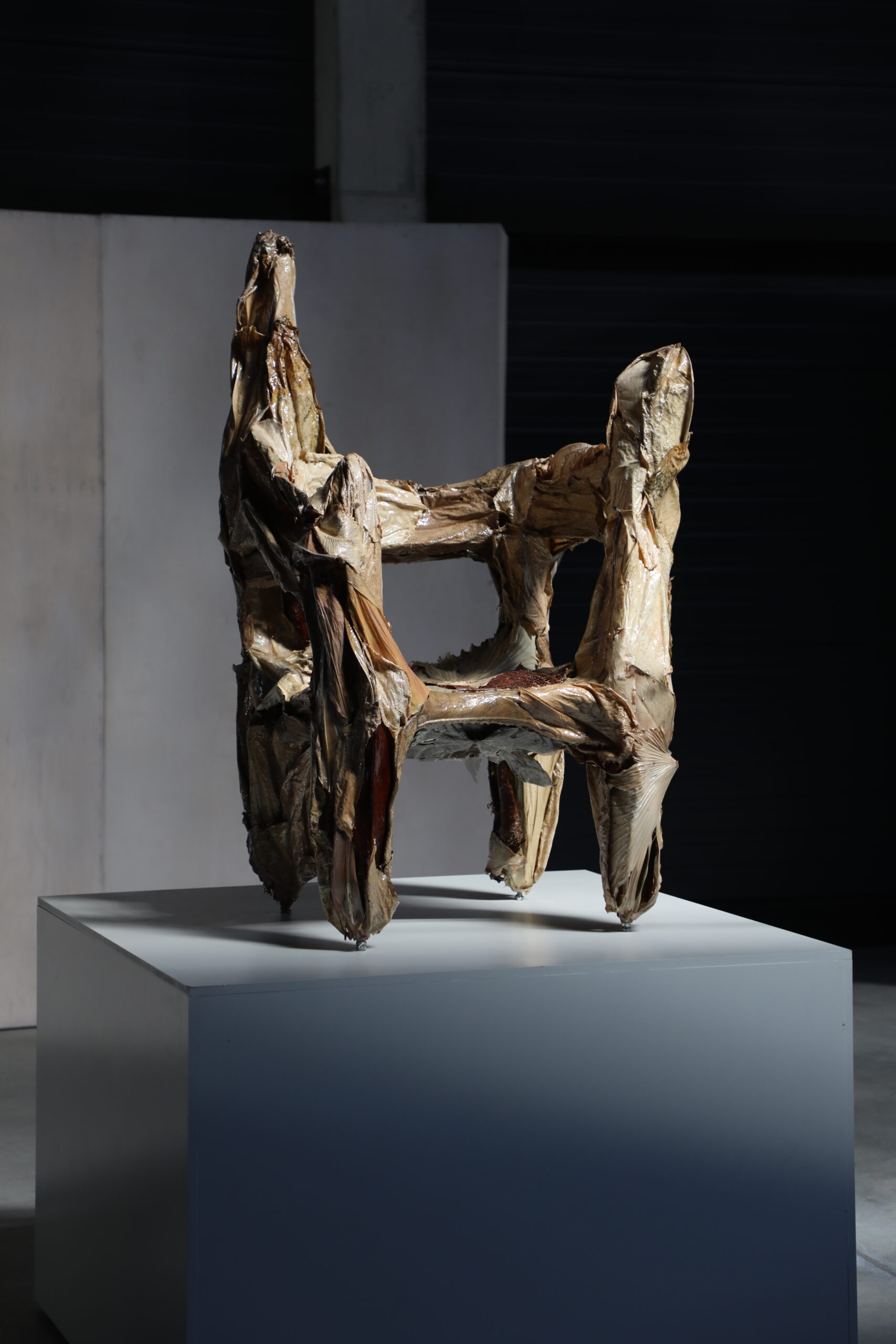
It became particularly relevant when museums began considering Protoplasting Nature for their collections. An early conversation with a museum in the United States reached an impasse over conservation. Years later, when Centre Pompidou pursued the acquisition, the same dilemma resurfaced. What exactly should a museum preserve? The physical object as it appears at a particular moment, the artist’s intention, or the unfolding record of its existence?
There is an inherent tension between the permanence we expect from museum collections and the unpredictable life of organic matter. Yet I have never felt that the two must be incompatible. The acquisition by Centre Pompidou was particularly meaningful to me for this reason. Beyond the recognition of the work itself, it suggested an openness to collecting something that might never remain quite the same – and to accepting change as an integral part of preservation itself.
There is an inherent tension between the permanence we expect from museum collections and the unpredictable life of organic matter. Yet I have never felt that the two must be incompatible. The acquisition by Centre Pompidou was particularly meaningful to me for this reason. Beyond the recognition of the work itself, it suggested an openness to collecting something that might never remain quite the same – and to accepting change as an integral part of preservation itself.
[ featured work ]
PN1901
CM H: 138 W: 74 D: 79
IN H: 54.3 W: 29 D: 32
2019